

Samir Patel
Samir writes reset guides and care notes so codes stay boringly reliable.
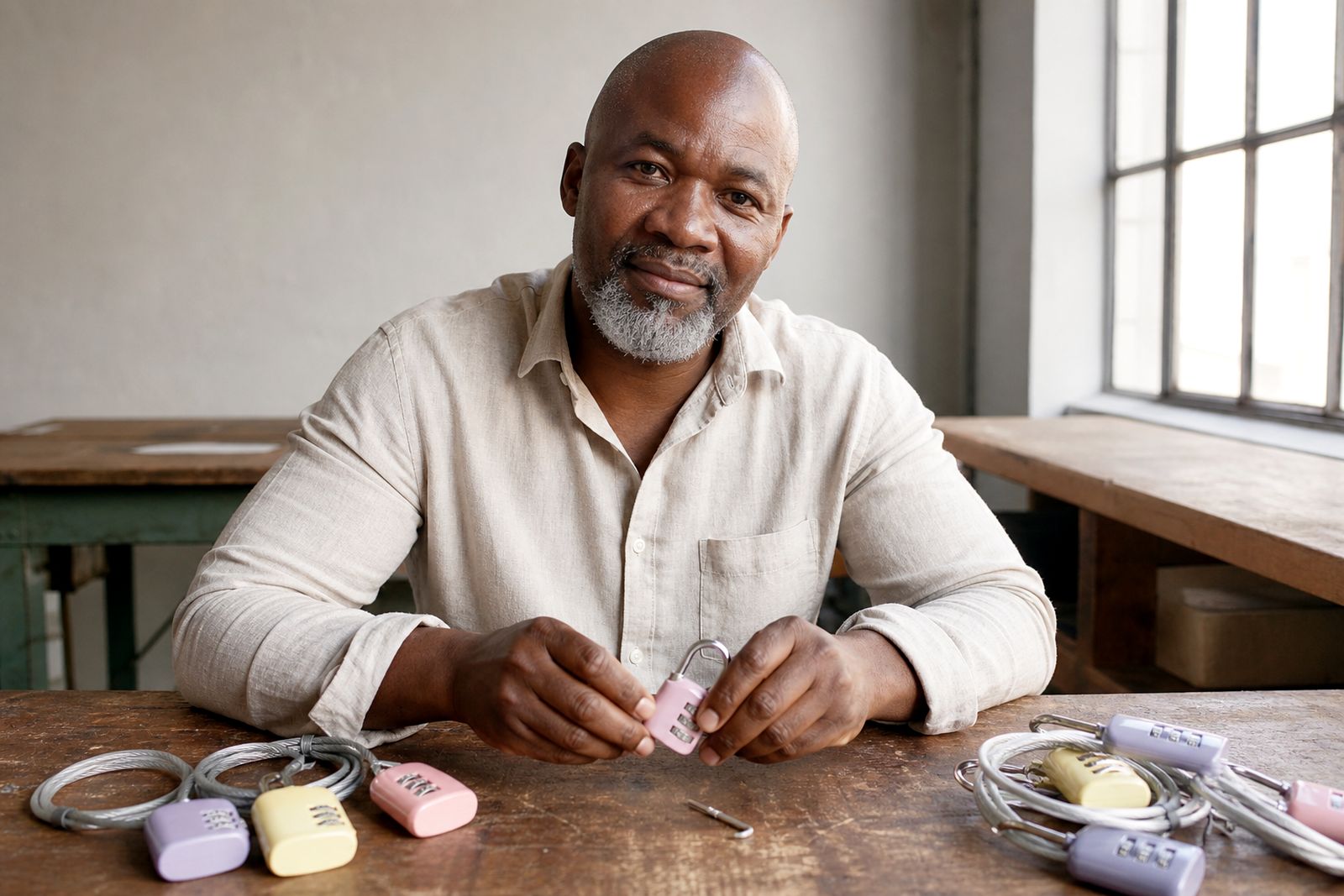
Reset habits Samir covers
Samir's notes focus on the small checks that stop code mix-ups before a flight. He writes around zipper pull fit, button feel, and how a lock sits on soft luggage versus a hard-shell case. Those details matter when a lock must be opened quickly at an airport counter or outside a gym locker.
His reset guidance leans on repeatable steps rather than memory. A traveller changing a code in a hotel room needs the same routine as someone setting a fresh lock at home in Johannesburg or Cape Town. He also flags when a spare bag lock should stay separate from the main suitcase setup.
Care notes from Samir take South African conditions seriously. Coastal air can leave residue on exposed metal parts, while inland dust can build up around wheels, zips, and lock bodies kept in a boot during the week. His advice centres on wiping down, checking movement, and spotting wear before the next trip.
For family travel kits, Samir writes instructions that still make sense when someone is tired and packing in a rush. He puts the first code change early, then the latch check, then the spare-key or backup item check where relevant. That order reduces the usual mistakes seen just before departure.
He also covers everyday carry, not only flights. A gym-bag lock gets opened in changing rooms, parking areas, and reception spaces with poor lighting, so the setup must be easy to repeat without guessing. Samir's notes point out simple checks on dial visibility, loop placement, and bag access in crowded settings.
Routes through OR Tambo and other busy airports shape much of Samir's writing. He explains why the same lock may behave differently on chunky suitcase zip pulls, narrow duffel loops, or a locker hasp used midweek. Matching the advice to the bag type matters before changing anything.
Samir's notes focus on the small checks that stop code mix-ups before a flight. He writes around zipper pull fit, button feel, and how a lock sits on soft luggage versus a hard-shell case. Those details matter when a lock must be opened quickly at an airport counter or outside a gym locker.
His reset guidance leans on repeatable steps rather than memory. A traveller changing a code in a hotel room needs the same routine as someone setting a fresh lock at home in Johannesburg or Cape Town. He also flags when a spare bag lock should stay separate from the main suitcase setup.
Care notes from Samir take South African conditions seriously. Coastal air can leave residue on exposed metal parts, while inland dust can build up around wheels, zips, and lock bodies kept in a boot during the week. His advice centres on wiping down, checking movement, and spotting wear before the next trip.
Also worth a look




Tell us about the job
Send sizes, materials and where you are through our contact form, and we will come back with the practical options.
Open the contact form