

Cable Loops For Soft Sided Luggage
Find it under /guides/cable-loops-for-soft-sided-luggage.
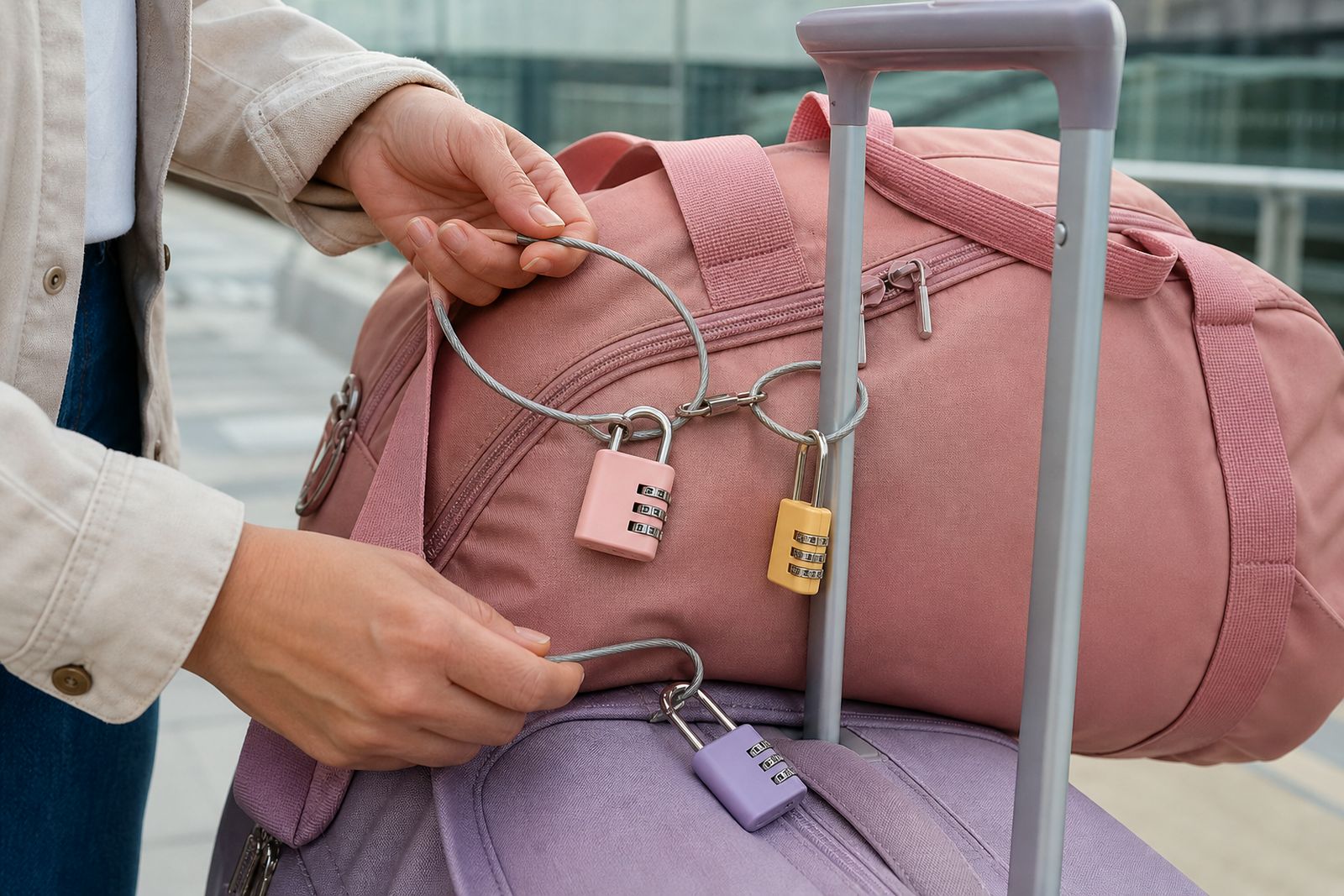
Best Loop Points On Duffels
Soft-sided bags usually lock best when the cable passes through both zip pullers and then around a fixed handle base or webbing loop. Thin fabric tabs can tear under a hard tug, especially on older duffels used for domestic flights. Check that the loop sits snug without crushing the zip track.
Vinyl-coated steel cable is kinder to nylon and canvas than bare wire, particularly on bags that ride in car boots and overhead bins. At the coast, salt air can sit on metal parts after a weekend away, so wipe the cable before packing the bag again. In Gauteng dust, a quick clean keeps grit out of the lock body and off the zip pulls.
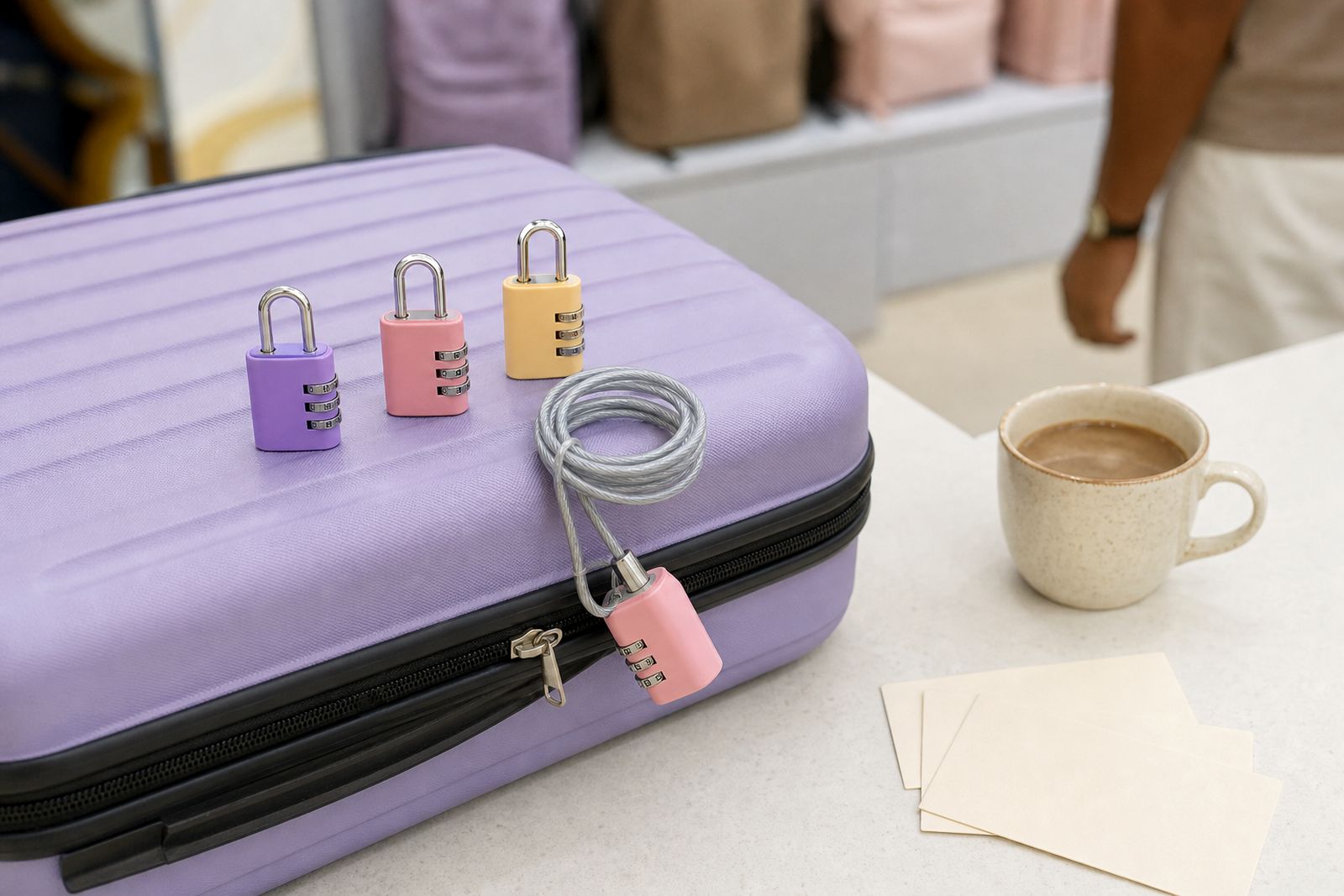
A cable loop earns its place on soft luggage because it can wrap around awkward shapes that a rigid shackle cannot reach. That matters on backpacks, sports bags, and expandable cases with fabric gussets. Set the combination before your trip and test the open-close motion twice with the bag fully packed.
For gym bags, the useful check is whether the cable can pass through the locker fitting and still catch both zip heads. Some day bags need a shorter path to stop the lock body from swinging while you walk. Try the route at home so you are not sorting straps and zips in a crowded change room.
At OR Tambo and Cape Town International, soft luggage often gets handled fast, so loose zip pulls and weak fabric eyelets show up quickly. A cable loop helps when the zip heads do not line up neatly for a standard padlock shackle. If the bag also goes to the gym during the week, choose a loop size that works in both places.
Expandable suitcases and soft carry-ons often have recessed zip paths that suit a flexible cable better than a chunky lock arm. The aim is to secure the opening without forcing the zip heads into a bent angle. If the cable rubs the fabric edge too sharply, choose a different anchor point on the bag.
Soft-sided bags usually lock best when the cable passes through both zip pullers and then around a fixed handle base or webbing loop. Thin fabric tabs can tear under a hard tug, especially on older duffels used for domestic flights. Check that the loop sits snug without crushing the zip track.
Vinyl-coated steel cable is kinder to nylon and canvas than bare wire, particularly on bags that ride in car boots and overhead bins. At the coast, salt air can sit on metal parts after a weekend away, so wipe the cable before packing the bag again. In Gauteng dust, a quick clean keeps grit out of the lock body and off the zip pulls.
A cable loop earns its place on soft luggage because it can wrap around awkward shapes that a rigid shackle cannot reach. That matters on backpacks, sports bags, and expandable cases with fabric gussets. Set the combination before your trip and test the open-close motion twice with the bag fully packed.
For gym bags, the useful check is whether the cable can pass through the locker fitting and still catch both zip heads. Some day bags need a shorter path to stop the lock body from swinging while you walk. Try the route at home so you are not sorting straps and zips in a crowded change room.
Zipper paths that suit cable loops
Cable loops suit soft sided luggage used on South African trips, daily gym runs, and ordinary city travel. BagLock Travel carries locks and travel security gear that suit fabric cases, duffels, backpacks, and other bags where a rigid shackle can be awkward. The key checks are where a cable loop works, what to inspect on the bag, and when a different lock style makes more sense.
Start with the bag in front of you, not a product photo on a screen. Look at the zip pulls, the handle stitching, and any webbing loops that can take the cable without stressing the fabric. A soft-sided suitcase in Johannesburg commuter traffic may need a different lock path from a weekend duffel headed to Durban.
Some bags look lockable until you notice that the zip pulls are decorative and not built for regular use with a cable. Test the route with the bag packed, because a full compartment changes how the zip heads meet. On soft luggage, fit matters more than colour or finish.
If you compare options at a stockist or travel counter, ask to see the actual cable thickness and loop length. Those two details decide whether the lock can pass through zip eyes, locker slots, or stitched anchor loops on the bag. Printed specs help, but a physical fit check tells you more on soft-sided luggage.
Travel days in South Africa often include stop-start movement between car, terminal, shuttle, and hotel, so the lock needs to be easy to remove and refit without fuss. Keep the combination noted before load shedding catches you mid-pack and the room light changes. The useful routine is to lock, unlock, and relock once before leaving home.
If more than one person will use the same bag, show them the exact cable path rather than only telling them the code. A short handover avoids forcing the loop through the wrong strap or leaving one zip pull unsecured. That matters on school tours, family trips, and shared sports bags.
Care is straightforward. Wipe the cable and lock after dusty road travel or a damp coastal weekend, store the spare where it is easy to find, and check the coating for wear before the next trip.
Check the bag before buying or packing. Keep your own duffel, backpack, or fabric suitcase next to you, then test whether the cable reaches both zip pulls and a sensible anchor point. In Observatory and Rosebank, seeing the bag in person can save a wrong pick, but the same checks still apply if you are packing elsewhere.
What does not help on soft-sided luggage is forcing a bulky lock onto tiny zip eyes or clipping onto trim that was never meant to take strain. A cable loop should follow the shape of the bag without twisting the zip heads out of line. Keep the setup honest and the checks simple.
Three things matter most. Check that the cable passes through the actual zip hardware. Check that the anchor point is stitched or fixed, not decorative. Check that you can open it again quickly when you reach security, the gym, or your accommodation.
One extra habit helps on repeat trips. Use the same locking route each time, especially if two similar bags live in the house. That way the next person does not have to guess which handle, loop, or strap was meant to secure the zip area.
Also worth a look
Tell us about the job
Send sizes, materials and where you are through our contact form, and we will come back with the practical options.
Open the contact form