

Care and cleaning
Sand, mud, and quiet dial care.
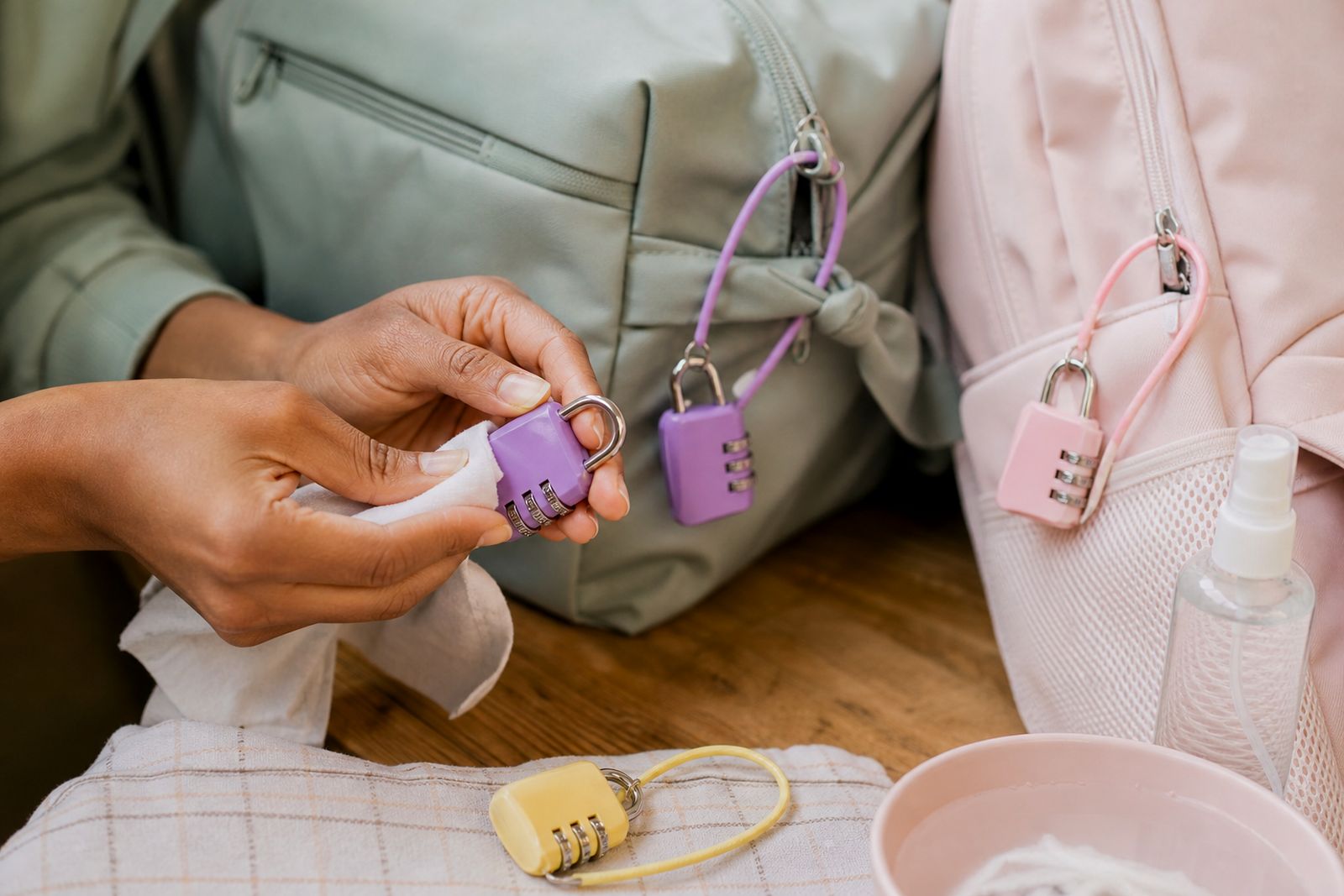
What to clean, what to leave
Start with the obvious mess. Wipe off beach sand, red dust, gym chalk, sunscreen residue, and dried rainwater before they work into the shackle, cable, or dial edge. Most care is simple: a soft cloth, clean water on the cloth if needed, and time to dry fully before the lock goes back into a bag. Combination dials need a lighter hand than people think. Grit packed around the number wheels can make a lock sound louder or feel stiff, so brush around the dial first and turn it slowly instead of forcing it through the resistance. If the lock travelled through OR Tambo or Cape Town International with baggage grime on it, clean it before the next trip rather than storing that dirt in the case.
Clean the lock where you can see the small parts clearly. A guesthouse counter, kitchen counter, or airport hotel basin edge works better than trying to rinse a lock in the boot after a long drive from Mbombela. Put down a towel, keep the code visible, and remove any luggage tag or cable loop that hides dirt around the shackle holes. Coastal air changes the routine. In Durban and other humid stops, dry the body and shackle properly after wiping so moisture does not sit inside the moving points overnight. Inland dust is different, especially after road trips through drier areas, so focus on brushing particles away before you add any moisture at all.
Many visitors get here with a catalogue tab open and one worry they have not named yet. We slow that down. Look at fit, service, and the next human action. A lock, a seal, a kit, or a bench pick only earns its place if someone on your side can repeat the step without us in the room. In Pietermaritzburg we see the same pattern as in Durban: the first week looks busy, and the second week shows which habit survived. Write the habit where the team already looks, on a card, a run sheet, or the back of the job ticket.
Skip household shortcuts that leave residue. Thick oils, silicone sprays, hand cream, and kitchen cleaners can attract more dirt or make the dial slippery without fixing the cause. If a TSA friendly luggage lock or gym-bag lock is sticky, the first check is usually trapped grit, not a need for more product. Look at the material before you start. Metal shackles can be wiped and dried, while coated cables and soft kit pouches need gentler cleaning so the finish does not scuff or peel. If a travel security kit includes small parts or spare seals, keep them out of the rinse area and return them to one pouch once everything is dry.
After a muddy weekend away or a wet gym session, do the reset before the next use. Open the lock, wipe the body, clean around the hinge points, then check that the code still turns cleanly through all numbers before you close it on a bag. A five minute check at home beats finding a jammed dial at the airport queue. Water exposure needs one extra step. If a lock was caught in heavy rain, dried inside a packed suitcase, or sat in a damp locker, leave it open to air out before storage. For kits with pouches, straps, or seals, dry each piece separately so hidden moisture does not transfer back onto the metal parts.
Start training properly and end it properly. Book it like a paying job. Open ended evenings rarely finish the module that matters, whether you are in Mbombela or driving through to Pietermaritzburg. We would rather run a short session that names the next action than a long tour of every option in the range. Bring the people who will actually do the work. A manager who nods and a crew who never saw the step is how good gear goes dusty. After the session, leave with a written note. Email is enough.
Warranty and care are ordinary, which is the point. Wipe grit off, store spares where the next shift can find them, and do not invent a new filing system in the week you launch.
Set a firm start and finish for training before anything else. Book it like a paying job. Open ended evenings rarely finish the module that matters, whether you are in Johannesburg or driving through to Durban. We would rather run a short session that names the next action than a long tour of every option in the range. Bring the people who will actually do the work. A manager who nods and a crew who never saw the step is how good gear goes dusty. After the session, leave with a written note. Email is enough.
Do not soak a lock for no reason. Do not force a dial that feels gritty, and do not scrape at the finish with keys, knives, or wire brushes. A stiff lock needs dirt removed and the movement checked, not a harder hand. Avoid packing a lock away while it is still damp. Avoid mixing loose spares from different kits in one pouch if you will not recognise them later. Keep care simple, visible, and easy to repeat before the next airport run or gym stop.
If the rest slips, keep these three lines visible. Name the city and the constraint. Name the supplier and the lead time. Name the next human action and who owns it. Care and cleaning is finished when those three lines are written down and someone else can follow them on a Friday afternoon. That is the standard we use at BagLock Travel, from the first email to the follow up after you have tried the step in Mbombela. Write when the setup changes. Bring the new photo. We will meet you at the same level of detail, no louder than the work requires.
Keep the humidity note with the job card, not in a chat that scrolls away. Another: Date the card in the corner so next season knows which copy won. Teams in Pietermaritzburg tell us the third reminder is the one that sticks, so here it is: If two people share the tool, label the tray with both names. None of these replace the spec. They stop the spec from living only in someone's head.
Tell us about the job
Send sizes, materials and where you are through our contact form, and we will come back with the practical options.
Open the contact form